AI for biotechthat does science at scale, and keeps it yours.
AI scientists are arriving. The frontier labs are building AI that reads, reasons and runs experiments, and some have started drug discovery of their own. Making it work on your science means connecting it to your data, running it at scale without it falling over, and keeping unpublished results inside your own walls. That's what we build.
Follow a research cycle ↓
JD Wuarin, our co-founder, worked with Genomics to build systems that process genomic data with AI, and built NanCI for the US National Cancer Institute with Duncan. Our scientific advisor, Dr Oliver Bogler, is CEO of the Night Science Institute and led the NCI's Center for Cancer Training. JD on LinkedIn ↗
From the bench and the code
Where AI in biotechgets stuck.
AI scientists change what's possible. These are the problems that decide whether they work on your science.
Your data isn't ready for an AI scientist
Results sit in instruments, lab notebooks, LIMS and spreadsheets, and the metadata breaks between the wet lab and the analysis. An AI scientist is only as good as the data it can reach, and most AI pilots that fail, fail on the data.
The literature outruns everyone
PubMed adds more than a million new records a year. AI can finally read it all, but only if it knows your targets, your assays and your history, not just what's public.
Scale breaks fragile pipelines
Bioinformatics held together by custom scripts gives different answers on different machines. Run it thousands of times with an AI scientist and every inconsistency multiplies, until nobody can say which result to trust.
Your data is your edge
Patient data, consent terms and unpublished results can't simply be sent to someone else's AI, especially now that some of the labs behind those models are doing science of their own.
AI scientists
AI scientists are here.Who builds your lab around them?
The frontier labs are now building AI that can read, reason and run experiments. That changes how much science can be done, and by whom. It doesn't change what it takes to make it work on your science, at scale.
What the frontier labs are building
- Anthropic's Claude Science, a workbench for scientists, alongside its own drug discovery programme and partnerships with the Allen Institute and HHMI.
- OpenAI's GPT-Rosalind for life sciences, and an AI chemist that improved a real reaction in a robotic lab.
- Google's AI co-scientist, generating and ranking biomedical hypotheses.
- Autonomous research systems that design, run and write up experiments end to end.
What it takes to use them at scale
- Connected to your instruments, LIMS, notebooks and data, which is where most AI pilots fail.
- Your context, so they reason about your targets, your assays and your history, not just the public literature.
- Thousands of runs that don't fall over: durable, versioned workflows with every step recorded.
- A scientist checking what matters. AI scientists still invent references and drift from the plan.
- Inside your own walls, and free to use whichever lab's model is best this month.
That's what we build: the lab around the AI scientist.
Day science and night science
AI can search your data.Can it help you think?
François Jacob, who shared the 1965 Nobel Prize, called the rigorous part of research day science: testing hypotheses and proving things. What comes before it, he called night science: wandering, connecting, noticing what doesn't fit. Most AI, AI scientists included, is built for the day. Breakthroughs still start at night, with a scientist. Our scientific advisor, Dr Oliver Bogler, is CEO of the Night Science Institute.
Day science
Testing, at scale
Here AI is at its best as brute force, done reliably: checking every paper, running every analysis, testing a hypothesis a thousand ways. This is where AI scientists, pipelines and precise context earn their keep.
Night science
Asking better questions
Here AI should ask rather than answer. That's why we built Parlium, our own AI thinking partner for scientists. In night mode it doesn't look anything up or judge your idea: it plays the second person in the pair, helping you find and develop an idea of your own. In day mode, it then tests that idea against the literature and existing grants.
WithParlium ↗
The scientist stays at the centre: AI does the brute force, and sharpens the thinking. It doesn't do the thinking for you.
Read how we built an AI that asks questions instead of answering them →The question scientists ask
What if your model provider becomes your competitor?
It's a fair question, and no longer hypothetical: Anthropic now runs its own drug discovery programme, and OpenAI works directly with drug companies.
Enterprise terms say your data won't be used to train their models, and the big providers take that seriously. But your experiments still leave your walls, may be retained for a time, and sit under another company's jurisdiction. For unpublished science, that's a risk worth designing out.
Open models, inside your walls
Sensitive work runs on open-weight models in your own infrastructure. Precise context from Alexandria is what lets a smaller, private model do the job.
Only what you choose leaves
Where a frontier model is worth it, only the data you approve goes to it, with anything identifying stripped out first, and every call is logged.
Switch providers any time
Built so you can change models, or bring them in-house, without rebuilding. No single lab holds your science.
Who it's for
Every kind of labhas different problems.
A drug discovery team, a genomics company and a research institute need different things from AI. We start from your science.
Drug discovery
Targets, literature and patent landscapes, and assay data that needs to join up across teams and partners.
Genomics and diagnostics
Pipelines that scale, interpretation that keeps pace with sequencing, and reports clinicians can trust.
Research institutes
Scientists drowning in papers, and collaborations that depend on finding the right people and the right work.
Clinical and translational
Imaging, multimodal and patient data, kept private and anonymised before any AI sees it.
A research cycle, faster
From the literatureto the next experiment.
Discovery is a cycle: read, think, design, run, learn, and round again. This is where AI speeds each turn, and which part of what we build does the work.
01 · Read
Every paper, digested
Agents read, summarise and tag the literature and your own reports, and tell each scientist what's new in their area.
02 · Think
Ideas worth testing
Night science: a thinking partner that helps a scientist develop a hunch of their own, then tests it against the literature.
03 · Design
The next experiment
Prior results, protocols and data pulled together, so the next experiment builds on everything you already know.
04 · Run
Pipelines that run again
Processing as durable, versioned workflows: the same inputs give the same outputs, and every run is recorded.
ByPharos
05 · Learn
Signal from your data
Models trained on your imaging, sequencing and assay data find the signal, and every result feeds the next turn of the cycle.
ByOur machine learning engineers
Where it helps
Where AI paysin the lab.
Literature and knowledge at scale
Agents digest papers, preprints, patents and your own reports, tag them to your targets and pathways, and brief each scientist on what matters to them. It's what we built NanCI to do for the NCI.
Worth: Less time reading, and fewer surprises from your own field.
Genomic and omics pipelines
Processing rebuilt as durable, versioned workflows, with AI where it helps: quality control, annotation and interpretation.
Worth: Faster turnaround, and results you can reproduce.
Imaging and multimodal models
Models for whole-slide images, scans and assay data, built by engineers who have done it, and can explain what the model actually learned.
Worth: New signal from data you already have.
Hypotheses worth testing
Parlium supports the creative side of science: its night mode helps your scientists develop ideas of their own, and its day mode tests them against the literature, before anyone books the lab.
Worth: Better questions before expensive experiments.
Private by design
Models that run inside your own walls, and anonymisation that strips personal data before anything reaches an AI provider.
Worth: Patient data and IP stay where they belong.
Proof
Science we'vealready done.
NanCI for the National Cancer Institute
Generative AI that summarises, illustrates and tags millions of scientific papers, learns each researcher's interests and connects them in a network of scientists. Live and serving researchers at over 100 academic institutions, built with the NCI over more than three years.
Read the NCI case study →Parlium: a thinking partner for scientists
Our own product for exploring the scientific hunch you're not ready to share: testing it against the literature, and keeping what you find joined up.
Try Parlium ↗
From the National Cancer Institute
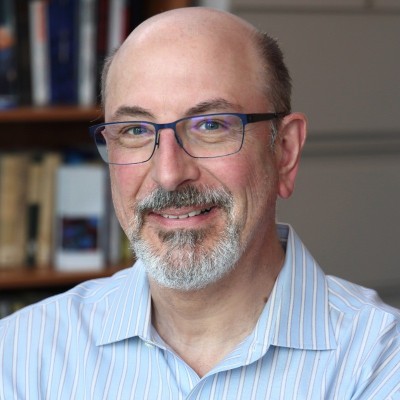
I have worked with Barnacle Labs for more than 3 years on a project at the National Cancer Institute (NCI). Duncan and JD were amazing – they treated the work like a collaboration, always investing their creativity and bringing their curiosity. So many times their great ideas became part of the next iteration and they went above and beyond. If you are looking for a partner in AI, I couldn’t recommend them more.
Dr Oliver Bogler
- CEO of the Night Science Institute
- Led the NCI's Center for Cancer Training, a $210 million portfolio
- Directed basic research at MD Anderson's Brain Tumour Center, and led its academic affairs
- Over 80 peer-reviewed publications · Cambridge, and a PhD from the Ludwig Institute for Cancer Research
- Now Barnacle Labs' scientific advisor
From our engineers
Machine learningon real biomedical data.
Our engineers write up their work in the open: the biology, the data preparation, the models, and what turned out to matter.
Kevish Napal
Oncology and proteomics
- 01Understanding cancer and telomerase →The biology behind the work, from telomerase to new treatments.
- 02Building a reproducible multimodal pipeline →Pairing RNA-seq with whole-slide images for the same patients, from TCGA, into clean, reproducible training data.
- 03Predicting telomerase activity from whole-slide images →Why mean pooling beat attention, and what that says about telomerase as a tissue-wide signal.
What happens next
From one problemto a system you own.
A one-day workshop
Pick the problem worth solving first: a literature burden, a pipeline that won't scale, data that won't join up, or a model you need.
A working prototype in two weeks
On your own data where it's safe to, or on public and anonymised data where it isn't, for your scientists to challenge.
Build it in our AI factory
Agents plan, build, test and security-scan; our engineers approve the plan and the result. Costs known up front.
Into production
On your own infrastructure, so patient data and IP never leave it. The code, and the models, are yours.
Running a lab, a pipeline or a platform?Let's talk.
Tell us where your science gets stuck, and we'll show you what AI can do about it.
Talk to JDCo-founder, Barnacle Labs · Built AI systems for genomic data